
Anyone with a building, a booking engine and enough energy can get the doors open and the first month booked. What the place looks like once the launch adrenaline is gone, that is the real exam, and most projects only sit it after everyone has stopped paying attention.
The Elephant Hostel sat it and passed.
The building
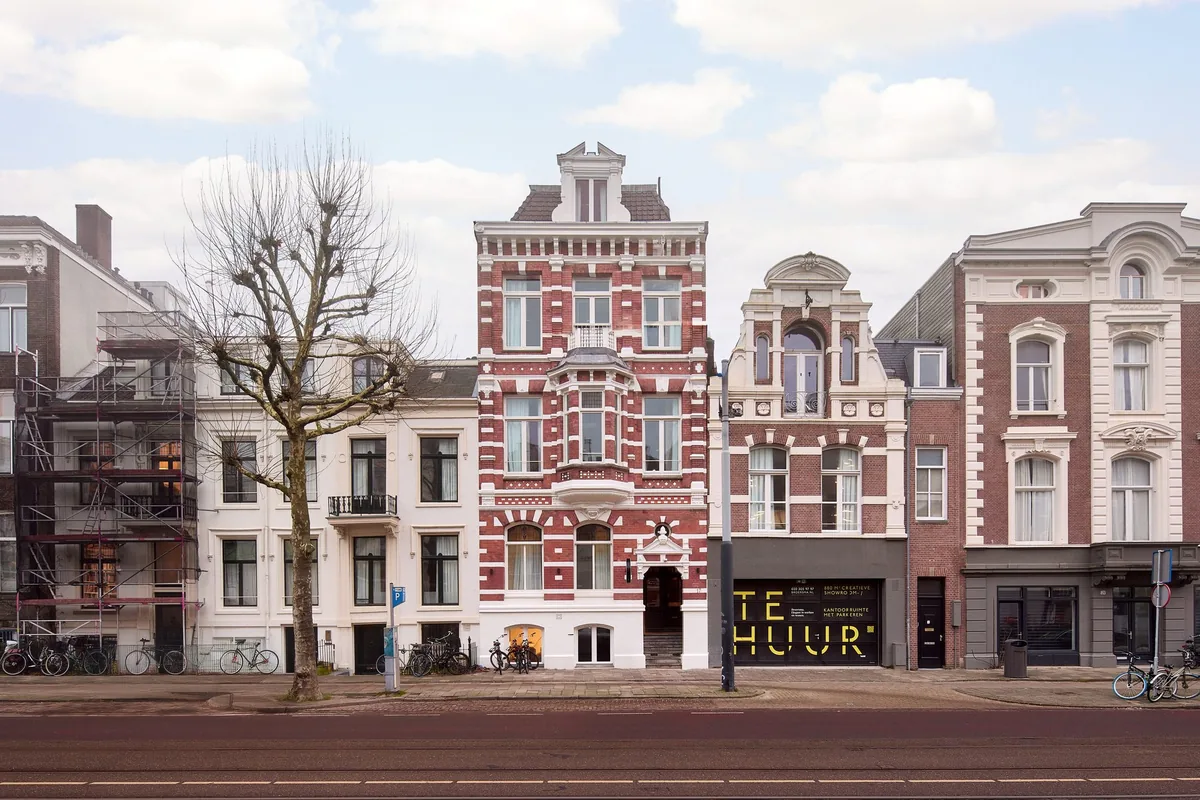
The Elephant occupies a heritage building in the Amsterdam Plantage, a quiet, green pocket of the city near the botanical gardens and the zoo. Restoring a listed building into a working hostel is a particular kind of problem. The interiors are the reason to stay, so they have to carry the guest experience, but they also have to survive full occupancy, luggage, late arrivals and a decade of wear. Get the balance wrong in either direction and you end up with either a beautiful building that cannot operate or an operation that has flattened everything worth looking at.
Weave took the project from early-stage concept through development, pre-opening, and operational handover: concept positioning, supplier coordination, the technology stack, the team, and the first months of operation. It was delivered as a discrete engagement on behalf of ownership, with a defined start and a defined finish, not an open-ended tenancy.
The part that matters is what happened after we left
A case study that ends at opening day is a press release. The interesting evidence sits further out.
The Elephant today operates at the top of its segment in Amsterdam. On Booking.com it holds an 8.9 across more than 1,500 stays, and it ranks among the highest-rated hostels in the city on Google. Its sister property, The Bee Hostel, delivered under the same ownership group to the same operating standard, sits on a comparable score across more than 3,000 reviews and ranks first of its category on TripAdvisor in Amsterdam. Two properties, both handed over, both still near the top of their segment years on.
Guest reviews are not a vanity metric for a hostel. They are the daily scoreboard. They set the ranking on the booking channels, which sets occupancy, which sets the revenue the owner actually sees. A score that holds for years is not luck and it is not the launch team's charm still echoing around the lobby. It is the sign that the operating setup underneath was built to run without its authors: the right suppliers, a tech stack the team can actually use, standards that survive a change of staff, and a handover that transferred the how and not just the keys.
Why the handover was the point
Plenty of operators can make an opening look good. The structural test is whether the property keeps performing once it is on its own, because that is when a weak setup shows. If the supplier relationships were personal favours, they lapse. If the systems were held together by one manager's memory, they unravel when that manager leaves. If the standards lived in someone's head rather than in the operation, the score drifts down a quarter at a time and no single review looks like the culprit.
Weave builds the opposite way on purpose: contracts, accounts, systems and standards are the owner's from the start, for the reasons set out in the owner-aligned management model. The Elephant's score is what that looks like a few years down the line.
To be clear about where the credit sits: today's score belongs to the owners and the team running it day in, day out. Our part was building a setup solid enough that handing it over cost the property nothing.
In ownership's words
From early-stage concept through to execution and ongoing operational support, Weave combines strategic insight with hands-on delivery. They understand hospitality from a real operational perspective, not just on paper. Both hostels are now performing at the top of their segment in Amsterdam.
CEO, Glosec B.V., co-owner of The Bee Hostel and The Elephant Hostel, Amsterdam
If you are developing a hostel of your own
A boutique hostel is a harder operating problem than its relaxed front-of-house suggests, and it rewards being built properly from concept rather than fixed later. That is the work Weave does, concept through operational handover; how we run it is on the hotel development page.
Related reading: Hotel pre-opening: what the months before opening actually decide · The Elephant Hostel project page
If you are at concept stage with a building and a plan, start the conversation.